Details on how to attend this course will be provided by email once your registration is complete. You can also access your profile page to view all of your registrations.
Payment information will be collected when you checkout on the following page.

This class will use an etymological approach to gain a deeper understanding of terms and ideas in the sutras. This approach clarifies many of the meanings embedded in the sutras. They have always been there, but due to a lack of knowledge of Sanskrit they remained hidden.
Sanskrit is even simpler and more direct than languages like Russian or English. The grammar of Classical Sanskrit (which P.R Sarkar used) was formulated by Panini 2,500 years ago. Panini’s Sanskrit was spoken only by educated people and was primarily used to preserve ideas in shlokas, sutras, and shastras.
Panini formulated around 4,000 rules and identified about 2,000 roots. Today, we would say that Panini built a compiler to translate thought into Sanskrit text. Panini took the spoken Sanskrit, stripped away exceptions, gave it an ultra-logical form, and made it almost mathematical.
Sanskrit is like a Lego set. There are roots and there are prefixes and suffixes, making it easy to form new words in a straightforward manner. Ideas recorded in Sanskrit carry meaning that is more precise and endures longer than if written in spoken languages. Also, Sarkar was an advanced linguist who possessed a brilliant mastery of words, loved to dig down to the roots, weeded out incorrect meanings, and used the exact concepts.
This all creates excellent conditions for approaching Ananda Sutram through an etymological lens — that is, analyzing what the words in the sutras mean in and of themselves.
That is, a literal, root-based approach yields a more precise meaning of the words than does relying on Sanskrit dictionaries (such as Monier-Williams). The habit of translating words using dictionaries clouds our understanding of Ananda Sutram. We fail to understand Sarkar’s idea accurately— even though his ideas have always been right there.
This course has 1 lessons:
- December 05, 2026 @ 08:00 AM PST for 90 minutes.
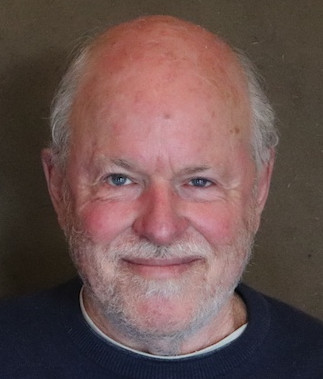
Ronald (Ravi) Logan
Ronald Logan is the Executive Director of the PROUT Institute. He is the principal author of PROUT: A New Paradigm of Development. In 1993, he co-authored the Plan for the Economic Development of Khabarovsk Krai on the Basis of PROUT, a report undertaken at the invitation of the Vice-Governor of Khabarovsk Krai in Far East Russia. His new books are A New Interpretation of Revolution and Transition to a New Era. He is also the co-founder and program director of Dharmalaya, where he has developed a diversity of residential training programs.